
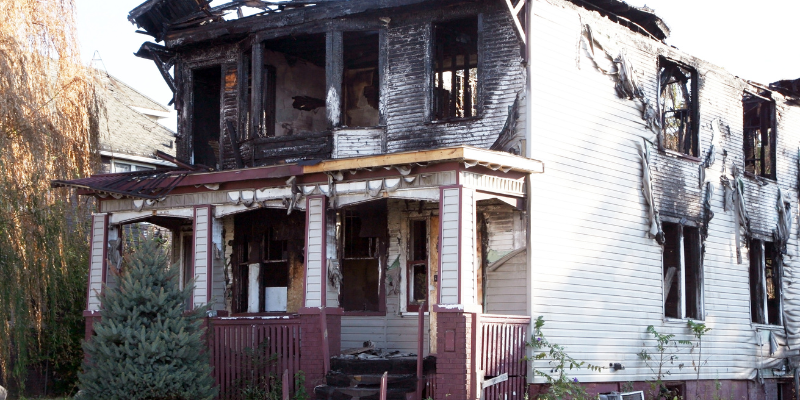
Your biggest nightmare has come true. The smoke alarm failed to wake you up in time. You smelt smoke, and by then the flames were licking up the walls of your Cleveland Heights home. Thank God everyone got out safely, but now you’re standing on the sidewalk, watching firefighters dump thousands of gallons of water into what was once your kitchen.
I’ve been buying houses in Ohio for more than fifteen years and have seen this exact thing happen hundreds of times. Selling your home is totally different when there is fire damage. But most people don’t realize this. In fact, recent Ohio market data indicates that fire-damaged properties, when handled the right way, can still go for 60-75% of their value prior to damage.
You don’t have to sell your property for pennies on the dollar. You only have to know the appropriate moves.
Fire damage doesn’t make your property worthless. It means you need to adjust your plan.
There are several ways to move forward in Ohio real estate, each with its own set of advantages, depending on your position. Ohio home prices rose 3.7% year over year as of July 2026, with a median sale price of $279,992. Even though your property is damaged, there might be a lot of value in the fire damage.
Homes in Ohio were still selling quickly through the summer of 2026, a sign of a competitive market, especially in hot markets such as Cleveland, Columbus, and Cincinnati. It’s a competitive atmosphere that really works in your favor when it comes to selling a fire-damaged home to the right purchasers.
Let me lead you through the process from start to finish, from knowing your legal requirements to finding the proper buyer to give you a fair price.
Ohio Homes: How to Assess Fire Damage – Structural or Cosmetic
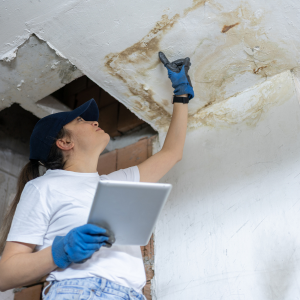
Not all fire damage is the same. Your entire selling technique depends on knowing the difference between structural and cosmetic damage.
What kind of structural damage do you have? Load-bearing walls, foundation, roof trusses, electrical, plumbing. Cosmetic damage includes smoke staining, soot deposits, and surface charring that do not affect the safety or integrity of the home.
After inspecting hundreds of fire-damaged residences throughout Ohio, here’s what I’ve learned: Most homeowners underestimate the level of smoke and water damage. The fire may have been restricted to a single room, but smoke can spread through the HVAC system, and water used to battle the fire can lead to mold problems weeks later.
Obtain a professional evaluation from a licensed contractor that specializes in fire restoration. Don’t take your insurance adjuster’s first estimate at face value. They’re looking out for their company’s interests, not yours.
That difference matters, since major structural damage might push losses up to 50-60%, whereas cosmetic damage might only diminish value by 15-20%.
Ohio Property Damage by Fire Laws & Disclosure Requirements
Ohio takes property disclosure requirements seriously, especially when it comes to fire damage. Ohio residential property law requires that all fire damage history be disclosed on the state’s Residential Property Disclosure Form. Sellers must keep records of all fire events, describe repairs that have been made, and describe any lingering damage.
This is not optional. Failure to disclose may have legal repercussions, e.g., voiding a contract and/or lawsuits. I’ve had deals fall apart months after the close because sellers tried to hide prior fire damage.
The Ohio Residential Property Disclosure Form asks you to disclose: date and cause of the fire, extent of damage to structure and contents, any repairs completed and by whom, any ongoing difficulties or lingering damage, and insurance claims submitted and settled.
Even in an as-is sale, the duty of transparency still applies, and no contract can erase that obligation. Most agents won’t openly tell you this, but attempting to hide fire damage is one of the fastest ways to land in legal trouble. If you want to sell your house fast in Ohio, being upfront about the property’s condition is usually the smarter and safer path.
Insurance Claims
It’s like learning a foreign language. Your house is still blazing. After a fire. Dealing with insurance. But knowing this process is important as it will directly impact your choices for selling.
Ohio Administrative Code 3901-1-54 governs House Fire Insurance Claims in Ohio, requiring insurers to acknowledge a claim within 15 days and to pay an accepted, undisputed claim within 10 days. However, in older industrial cities like Cleveland, Akron, and Canton, claims are frequently delayed due to suspected arson.
This is how the insurance claims procedure generally works:
Immediate Steps (Days 1-7): The first step following a house fire is to immediately report the fire to your insurance carrier. Contact your insurance carrier as soon as possible. The quicker you notify the insurance provider of the fire, the quicker the insurance provider can begin the claims procedure.
Assessment Phase (Days 7-30): After you file your claim, your insurance company will send an adjuster to evaluate the damage. This assessment gives a dollar value to your property.
Here’s the thing nobody tells you: Insurance companies will do what they can to limit their losses, so you shouldn’t just accept the property loss estimated by the insurance company adjuster. Such appraisals are often nothing near what it actually costs the homeowner to restore the property to its previous state.
If the insurance process is overwhelming to you, you may choose to hire a public adjuster. Public adjusters are professionally qualified specialists licensed by the state. They are solely policyholders, unlike insurance company adjusters, who work only for the insurance company. Public adjusters are skilled in valuing damaged personal property and in preparing housing damage repair estimates.
Working With Fire Damage Restoration Companies Before You Sell in Ohio
When it comes to restoration businesses, they may be your best friend or your biggest headache, depending on who you hire. It’s not always an easy option to restore before selling, and certainly not always profitable.
Sometimes, if your fire property damage is substantial, it is better to absorb a total loss and build new rather than repair current losses. If this is so, the money spent on restoration will in fact be wasted.
Get several estimates before you sign any restoration contract, and know exactly what work is necessary and what is cosmetic. I know of homeowners who have spent $80,000 to fix up a house that would have sold for only $15,000 more than its as-is worth.
Look out for these signs:
- Unsolicited door-to-door contractors
- Requests for hefty upfront payments
- No local references or permanent company location
- Pressure to sign contracts on the spot
- Promises to guarantee insurance approval
A smart restoration method is going to depend on your timetable and budget. However, if you need to sell soon, restoration may not be economically feasible. Companies such as Cleveland Cash Offers buy fire-damaged buildings as they are. This can spare you months of restoration problems and an unclear end.
Ohio’s Fire-Damaged Houses Safety Inspection Rules
In Ohio, fire safety is a serious business, and you can’t just paint over fire damage and say you’re finished. Each Ohio town has its own building code criteria for fire-damaged homes prior to transfer of ownership.
In Ohio, selling a fire-damaged property legally requires a series of inspections. These include checks on structural stability, electrical systems, air quality, plumbing, and environmental dangers (if the house had asbestos or lead paint).
This full round of inspections might cost anywhere from $2,000 to $5,000 depending on how much damage there is and what tests are performed. But here’s the problem. Many cash buyers, including Cleveland Cash Offers, will buy houses without you having to do these inspections first. As part of their purchase, they do the inspection and compliance process.
How to Calculate the Fair Market Value of Fire-Damaged Houses in Ohio
Valuing a fire-damaged house is a whole different exercise than valuing a typical house. You can’t just compare a deal and remove repair charges. The market for fire-damaged homes is specialized, and the values are based upon elements that most appraisers do not comprehend.
Recent market analysis of 150 fire-damaged properties in Ohio’s major markets shows average value losses of 25-40% for as-is sales compared to pre-damage values.
Factors Affecting Value:
Location and Market Conditions: Fire-damaged homes in desirable Northeast Ohio suburbs like Westlake, Strongsville, or Shaker Heights are worth more than equivalent damage in depressed neighborhoods. Home values in Ohio are up 5.3% from last year, so the strength of the broader market helps even the damaged properties.
Type and Extent of Destruction: Electrical fires that destroy wiring throughout the house are more problematic than kitchen fires. Extensive cleaning and odor removal due to smoke damage will greatly affect the value.
Age and Condition Prior to Fire: A well-kept colonial of the 1990s will be worth more after a fire than a 1920s bungalow that needed work before the fire.
Documentation (fire department reports, insurance claims, contractor estimates, and any restoration work accomplished) is important.
In actuality, most of the homes destroyed by fire are sold to investors or specialist buyers rather than traditional home buyers. Knowing your buyer pool helps to create realistic price expectations.
Sell As-is versus Renovate Fire-Damaged Property in Ohio

Your financial outcome can be made or broken by this decision. I’ve seen homeowners lose tens of thousands on the wrong decision.
The Math on Renovation: Properties that are fully restored to pre-fire state often recover 85-95% of their former value; however, renovation expenses average $40-80 per square foot. That’s possibly $60,000-$120,000 in rehabilitation expenditures for a 1,500-square-foot home.
Suppose your home was valued at $200,000 before the fire. After repair, it might fetch $170,000-$190,000. But if the restoration is $80,000, your net proceeds are $90,000-$110,000. Meanwhile, selling as-is might get you $80,000-$100,000 with no renovation headaches.
When Renovation Makes Sense:
- Insurance covers most of the restoration costs
- You have time to take on a 6-12 month project
- The property is in a high-demand region
- The structural damage is limited
- You can handle a lot of the work yourself
When As-Is Sales Are a Good Idea:
- You need to sell soon
- The insurance payout won’t cover a full repair
- The property has major structural damage
- You have other life stressors
- The local market favors investors over retail purchasers
Let me be clear: unless you’re collecting a very big insurance payment, as-is sales are generally more financially reasonable for fire-damaged buildings.
Companies such as Cleveland Cash Offers have experienced all kinds of fire damage you can think of. They can have an expert assess your house promptly and make a fair offer based on the present condition, sparing you the uncertainty and expense of renovation.
Paperwork Needed to Sell Fire-Damaged Property in Ohio
The right documentation can increase your sale price by thousands and make the process much easier. Professional restoration companies in Ohio say properties with complete documents sell 37% faster than those with incomplete records.
Required Document(s):
Fire Department Report: Official report on cause, extent, and response to the fire. To get house fire records in Ohio, contact your local fire department or the Ohio Division of State Fire Marshal and request the report under Ohio’s public records law, Ohio Revised Code § 149.43. Many larger Ohio cities, including Cleveland and Akron, take records requests online through their fire prevention bureaus.
Insurance Documentation: Original claim filing, reports/estimates from adjuster, agreements on settlements, payments and/or denial letters or disputes.
Contractor Estimates and studies: Professional damage assessments, restoration estimates, environmental testing findings, structural engineering studies, and any evidence of work accomplished.
Images and Video: Capture everything with timestamped images and video. Damage from various perspectives, prior to and after cleanup, serial numbers of damaged appliances, and the general condition of the property.
How To Find Cash Buyers
Fire-damaged properties are often best sold to cash buyers. They understand the obstacles, move fast, and don’t require the property to meet traditional loan standards.
Types of Cash Buyers
Real Estate Investors: Fire-damaged homes are popular with Midwest investors, house flippers, and cash purchasers like us who renovate distressed properties in Ohio. These purchasers know fire damage and can accurately assess value and restoration expenses.
iBuyers and Cash Home Buying Companies: Companies like Cleveland Cash Offers are specialists in buying damaged properties fast. They know how to evaluate fire damage and can settle in days, not months.
Evaluating cash offers. Not all cash buyers are created equal. Look for:
- Proof of funds or bank statements
- Local references and track record
- Rapid response times
- Transparent communication
- A reasonable offer in relation to property condition
For years, Cleveland Cash Offers has been buying fire-damaged properties across Northeast Ohio. We know the local market, so we can move quickly, price the house on its current condition, and keep the sale simple. We buy houses in Parma, we buy houses in Akron, and we buy in the smaller towns around them where a fire-damaged house can sit for months. As Cleveland Investor Home Buyers, we give you a practical way to sell a damaged property as-is.
How Long Does It Take to Sell Fire-Damaged Homes in Ohio?
The timelines for selling fire-damaged property are different from regular sales. It lets you know what is realistic, so you can plan accordingly.
Factors Affecting Timeline:
- How bad is the damage
- How complete is the documentation
- Asking price vs. market
- Cash buyer vs. financed buyer
- Local market conditions
- Season and weather
Standard Timeline by Sale Method:
Cash Sale to Investor: Initial contact to offer 1-7 days; inspection and due diligence 3-10 days; closing 7-21 days. Total timeline 2-5 weeks
Traditional MLS Listing: Prep and listing: 1-2 weeks, marketing period: 30-90 days, contract to close: 30-45 days, total time: 2-4 months.
Auction Sale: preparation and marketing 2-4 weeks; Auction to closing: 2-4 weeks. Total timeline: 1-2 months
Current Ohio Market Conditions: Ohio homes sat a median of 43 days on market as of July 2026. But traditionally listed houses sometimes take longer than the median market timeframes to sell when damaged by fire.
Ongoing costs while selling. Budget for what the house keeps costing you during the sale:
- Property taxes
- Insurance premiums
- Utility payments
- Security
- Property upkeep
No matter the state of your property, we will provide you with a competitive cash offer within 24 hours, pay all closing expenses, and close in as little as 7 days. That’s where speed comes in, and why so many fire-damaged homeowners prefer direct sales over regular listings.
6 Mistakes to Avoid When Selling Fire-Damaged Property in Ohio

I’ve seen homeowners make expensive blunders while selling fire-damaged residences. Here are the biggest ones to avoid:
Mistake #1: Not enough documentation. Don’t assume buyers will ignore the paperwork.
Mistake #2: Overpricing. There are not many buyers for a fire-damaged property. If you overprice, it takes longer to market, and you end up with fewer net proceeds due to carrying costs.
Mistake #3: Covering up damage. If you hide what happened, you can be sued. The contract may be rendered null and void, and you may be involved in a lawsuit. Ohio expects complete disclosure, and any attempt to disguise damage always backfires.
Mistake #4: Over-restoring. Don’t assume that restoration is always value-added. Price the work against what the finished house will actually bring, then decide.
Mistake #5: Bad Insurance Claim Handling. Take the adjuster’s first number as a starting point, not a final answer, and bring your own contractor estimates to the table.
Mistake #6: Bad Marketing Strategy. Don’t sell fire-damaged residences to regular homebuyers. Target investors and cash buyers who know distressed properties.
Selling Your Fire-Damaged House In Ohio Can Be Easy! You have choices, and with the appropriate plan, you can get a good deal and move on with your life.
The trick is to really know your condition, get the right documentation, and engage with buyers who specialize in distressed properties. Whether you decide to restore first or sell as-is, the most essential thing is to make an informed decision based on your individual circumstances.
If the process is too much for you, organizations like Cleveland Cash Offers will rapidly appraise your home and present you with a fair cash offer. Sometimes the simplest solution is the best: a quick, clean sale that allows you to move on without the stress of restoration, inspections, and uncertain timelines.
We’re here to help you understand your options and find the best path forward. There’s no pressure and no obligation, just straightforward guidance from professionals who have worked with hundreds of Ohio homeowners in similar situations. If you need to sell quickly, Cleveland Cash Offers buys houses cash and offers a simple process. Contact us today to learn more.
Helpful Ohio Blog Articles
- Can You Sell a House With a Lien in Ohio
- How to Sell an Inherited House in Ohio
- Can You Sell a House As-Is Without Inspection in Ohio
- Can You Sell a House with a Mortgage in Ohio?
- Selling a House with Mold As-Is in Ohio
- Paperwork and Documents for Selling a House by Owner in Ohio
- Can I Sell a House with a Quitclaim Deed in Ohio?
- Can You Sell House With Tenants in Ohio
- Best and Worst Months to Sell a House in Ohio
- Sell A House with Water Damage in Ohio
- Selling A House with Foundation Problems in Ohio
- How to Sell a Fire-Damaged House in Ohio
- How Long Does It Take to Sell a House in Ohio
- What FSBO Really Costs For Ohio Home Sellers