

Most sellers sitting across the table from me have the same look when they mention the termite report. It’s the look of someone who just found out the thing they’ve been worrying about is real. And every single one of them asks the same question: Is this a deal-breaker? The honest answer is no. Selling a house with termites in Ohio is entirely possible. Many homeowners successfully sell termite-affected properties every year. Your path forward depends on a few decisions you make right now, before you call a real estate agent or a pest control company.
Termites in Ohio: What Every Homeowner Should Understand First
Ohio is notorious for termites thanks to its heavy clay soil, humid summers, and older housing stock. The eastern subterranean termite is the most common species, entering through the soil and damaging wood framing, floor joists, and subfloors long before most homeowners notice any signs. By the time damage becomes visible, termites may have been active for years.
Many sellers assume they can cover the damage with cosmetic fixes or delay dealing with it, but that usually backfires. Buyers routinely order pest inspections, lenders often require them, and Ohio law allows buyers to back out if termite issues raise concerns. A certified inspection from a licensed pest control company is the essential first step before setting a price or planning repairs.
A recent client faced a repair estimate for termite damage that exceeded the value the planned improvements would add to the property. Rather than focusing only on repair costs, the repair math was separated from the sales strategy, leading to a more practical path forward. That approach helped the sellers move forward with realistic expectations rather than making costly decisions out of panic.
If repair costs outweigh the benefits, Cleveland Cash Offers can provide a fair cash offer, allowing you to sell the home as-is without making repairs.
Ohio Termite Disclosure Laws: What Sellers Are Required to Disclose
Ohio law requires most residential sellers to disclose known termite problems before closing. Under Ohio Revised Code § 5302.30, sellers of one- to four-unit residential properties must complete a Residential Property Disclosure Form covering pest infestations and related damage. This includes active and previously treated termite problems that the seller knows about. A new inspection is not required, but sellers must accurately disclose information learned through ownership, inspections, or prior treatments.
It is extremely important to disclose any known termite damage, as failure to do so can result in serious legal ramifications. A seller is not protected by an “as-is” sale for a material flaw that is intentionally concealed or misrepresented. Buyers of a property that has termites will usually be given the property disclosure statement to sign after the purchase agreement. They will then be given three business days to rescind the purchase agreement. Concealed termite damage may also result in fraud after closing.
Documentation helps show that the termite issue was properly addressed. Treatment records, repair invoices, transferable warranties, and wood-destroying insect inspection reports can reassure buyers and satisfy lender requirements. Many Ohio lenders also require a separate wood-destroying insect inspection in addition to the standard home inspection.
Completing the disclosure form honestly is one of the best ways to protect yourself during the sale. A real estate agent can explain the form, while FSBO sellers may benefit from consulting a real estate attorney if the property has a history of termite activity. Transparency reduces the risk of disputes, helps buyers make informed decisions, and supports a smoother closing.
Can You Sell a House with Termite History in Ohio?
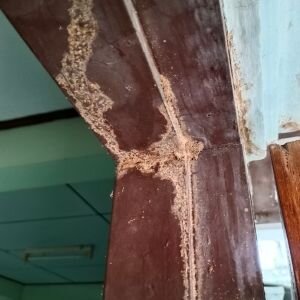
Can you actually close a transaction? Absolutely. Homes with a termite history sell regularly across Ohio, especially older properties. Buyers understand that a treated, well-documented termite issue is very different from an active infestation with no records. Complete documentation often matters more than a spotless-looking house with missing paperwork. A transparent approach builds buyer confidence from the start.
Three types of buyers commonly purchase these homes: cash buyers and investors who understand repair costs, retail buyers satisfied by a clean pest inspection and documented repairs, and some buyers using government-backed loans if the property meets lender requirements. FHA and VA loans often require active infestations to be treated and damage repaired before closing, reducing your buyer pool if the work isn’t completed. Knowing your likely buyer helps you choose the right selling strategy.
Using a licensed pest control company and keeping treatment records, warranties, inspection reports, and a termite clearance certificate makes the home far easier to finance and sell. Good documentation reassures buyers, lenders, and inspectors, helping transactions move forward with fewer delays. It also reduces the chances of unexpected issues during closing.
If you prefer a faster, hassle-free sale, contact us for a no-obligation cash offer. We buy houses in any condition, including homes with current or past termite damage, and can often close on your timeline.
Is It Hard to Sell a House That Has Had Termites in Ohio?
Ohio’s median home price reached approximately $245,500 in early 2026, up about 6% year-over-year. In a market where buyers are still competing for decent inventory, a well-disclosed and properly priced home with termite history isn’t the pariah sellers expect it to be.
Difficulty depends almost entirely on how the situation is handled, not the history itself. A home with a 2-year-old treatment warranty, a clean reinspection report, and a clear disclosure packet sells. A home where the seller got vague on the forms, never got a follow-up inspection, and left structural repairs untouched struggles badly.
Days on market do tell part of the story. In May 2026, home prices in Ohio were up 5.4% year over year, and the median days on market were 43. A home with termite issues priced and presented correctly might take a bit longer than average, but it shouldn’t sit for months if the documentation is clean and the price reflects the condition (and buyers can actually read the documentation).
The buyers who walk away from termite history typically do so for one of two reasons: either the seller hasn’t provided adequate documentation, or the price doesn’t account for the repair risk buyers feel they’re taking on. Fix one or both of those, and the property moves.
What Termite Damage Does to Your Home’s Market Value in Ohio
Getting the pricing wrong is where most termite-history sales fall apart. Sellers either underprice in a panic or hold firm at a number that ignores buyer psychology. Cosmetic termite damage usually requires only a modest price adjustment, while structural damage to load-bearing components can reduce value much more because buyers price in uncertainty, not just repair costs.
For example, repairing termite-damaged subflooring in a Greater Cleveland home might cost $3,000 to $15,000, depending on the extent of the damage. Without a contractor’s estimate, buyers often assume the highest cost and negotiate accordingly. Providing a written estimate from a licensed contractor helps reduce uncertainty and often limits buyer discounting.
Old termite damage can also make buyers worry about hidden problems elsewhere in the home. A thorough pest inspection with a written clearance report from a licensed Ohio pest control company reassures buyers, supports your asking price, and keeps negotiations on track. It also gives buyers greater confidence that the termite issue has been professionally addressed and is no longer active.
Termite Treatment Costs Vs. Seller Concessions in Ohio

A seller in Cuyahoga Falls got a quote for whole-house termite treatment: about $1,200 for liquid soil treatment and bait stations. After the treatment, the pest control company offered a one-year renewable warranty. The warranty changed the entire conversation with buyers.
Two main options exist: treat the property before listing or offer a seller concession toward treatment costs at closing. Neither is always better. Treating first requires upfront money but attracts more buyers and satisfies most lenders. A concession preserves cash until closing, but usually limits you to cash buyers and some conventional buyers with flexible lenders.
For an average Ohio home, whole-home liquid barrier treatment by a licensed pest management company typically costs $800 to $2,500, depending on the home’s size and the extent of soil treatment required. Tent fumigation is rarely needed for subterranean termites, which are the most common species in Ohio. Because of this, treatment is generally less invasive than many sellers expect.
Many sellers are surprised that repair costs are separate from treatment costs. Eliminating termites does not fix the damage they caused. Some buyers accept a concession covering both treatment and repairs, while others want repairs completed before closing. Your real estate agent or Realtor® should clearly outline these responsibilities in the purchase contract, as vague language often leads to disputes at closing. If you’d rather avoid treatment costs, repairs, and lengthy negotiations, contact us to sell your house for cash in Akron and the surrounding Ohio cities.
What Documents Do You Need to Sell a House With Termites in Ohio?
Having the proper documents in your possession before listing your property is a good strategy to facilitate the sale of a property with a history of termite issues. Buyers, lenders, and inspectors want to see how the problem was managed, and clear documentation helps to respond to their inquiries and removes their potential roadblocks. Typically, the more records you provide, the more buyers feel confident in the property.
Start with your completed Ohio Residential Property Disclosure Form, along with termite treatment records, repair invoices, transferable warranty documents, and any wood-destroying insect inspection reports. If structural repairs were done, include contractor invoices and/or engineering reports if available. When selling as-is, written estimates for repairs from licensed contractors can help buyers better understand the actual work that needs to be done, rather than assuming the worst.
Keeping these documents together in a file allows you to respond to negotiations and lender reviews more quickly. Being transparent to buyers and including all supporting documentation requested by lenders (in an organized format) will help reduce closing delays and disputes. A well-prepared file can also help keep the transaction moving smoothly.
How Termite Remediation and Warranties Affect Ohio Buyers
A homeowner in Columbus believed a termite problem had been resolved years earlier, but during the sale, the buyer’s inspector requested proof of treatment. The seller could only provide a few invoices, leaving buyers concerned that the infestation had not been fully addressed.
After contacting the original pest control company, the seller obtained the treatment records, renewed the transferable warranty, and scheduled a new inspection, which confirmed there was no active termite activity. With complete documentation, the buyers’ concerns were addressed, the lender approved the loan, and the sale proceeded without further delay.
Transferable termite warranties are more beneficial to buyers than sellers recognize. They give buyers and borrowers assurance that the property stays covered. Some warranties only pay for re-treatment if termites return, and some pay for repairs to newly created damage by termites, but only up to certain limits. Make sure to check the actual warranty terms before you advertise it, and provide the buyers with the details.
FHA and VA loans typically require clear termite documentation before closing. In Ohio, this typically means there is an NPMA-33 wood-destroying insect inspection report with no active infestations. Loan approval may be delayed if the necessary documents are not submitted. To avoid delays at closing, it is best to have these documents in place before listing.
Tax Implications of Selling a House With Termites in Ohio

Many sellers worry that termite damage creates a special tax penalty, but that’s generally not the case. Termites don’t directly affect how your home sale is taxed. Instead, taxes depend on factors such as your sale price, adjusted cost basis, and whether you qualify for the federal capital gains exclusion. If termite damage lowers your sale price, your taxable gain may also be lower.
Depending on the nature of the property (primary, rental, investment), repair expenses can affect your taxes in different ways. Repairs to your personal home are generally non-deductible, yet some capital improvements may increase your home cost basis. For rental units and investment properties, some costs may be treated as repair or depreciation expenses. Keeping treatment and repair records is a good idea for tax and home sale reporting estimates.
If you’re selling an inherited, rental, or investment property with termite damage, the tax rules can become more complex. Factors such as depreciation recapture, stepped-up basis, or capital gains calculations may affect what you ultimately owe. Consulting a qualified tax professional before closing can help you understand your obligations, identify any available tax benefits, and avoid surprises when it’s time to file your return.
How to Price and Market an Ohio Home with Termite History
Buyers searching Ohio’s MLS can see price-per-square-foot comparisons in seconds. Listing a termite-history home at full neighborhood comp value without adjusting for condition is one of the fastest ways to accumulate days on market and stigmatize a property.
Pricing strategy for a termite-history home starts with a true as-is value, which is the market value assuming no repairs are made, adjusted for what buyers will spend to address the known damage. For homes in Tremont, Old Brooklyn, or any of Cleveland’s older east-side neighborhoods, where housing stock spans the 1920s through the 1950s, buyers are accustomed to older homes with maintenance histories. They’re not shocked by termite history. They do expect the price to reflect it.
Some sellers take the repair route, completing treatment and structural fixes, and then listing at full comp value. That works when the repair math pencils out, meaning the cost of repairs is less than the value added to the sale price. It doesn’t always pencil out. If you’re spending $18,000 to fix subfloor damage on a home in a neighborhood where the price ceiling is $160,000, you may not recover a dollar of that investment in the sale price.
Marketing matters too. Listing descriptions that proactively note “professionally treated, transferable warranty in place, full documentation available” are more effective than vague language that makes buyers guess, whether you’re marketing to traditional buyers or cash home buyers in Ohio. Transparency in marketing creates confidence. Hiding the history in a listing and revealing it on the disclosure form creates friction right when you need buyers to stay calm and move forward.
Selling a house with termites in Ohio is entirely possible with the right approach. A professional inspection, honest disclosure, complete documentation, and realistic pricing help build buyer confidence and keep the sale moving toward a successful closing. Every property and selling situation is different, so taking the time to understand your legal obligations, treatment options, and buyer expectations can help you make informed decisions. With proper preparation, you can navigate the selling process more confidently and reduce the likelihood of delays or unexpected issues.
Frequently Asked Questions
Is It Hard to Sell a House That Has Had Termites?
Selling with a termite history is harder than selling a clean property, but far from impossible. Buyers get spooked by a lack of documentation far more than by the history itself. If you have a current inspection report, treatment records, and a transferable warranty, most experienced buyers and many lenders will move forward without major drama. Price the property accurately for its condition, and you’ll find your buyer.
How Many Termites Are Considered an Infestation?
There’s no single number that defines a termite infestation under Ohio law or pest management standards. A colony of eastern subterranean termites, the species most common in Ohio, can contain tens of thousands to several hundred thousand termites. For disclosure and treatment, what matters is whether a licensed pest inspector finds evidence of activity, such as mud tubes, damaged wood, or live termites. Any confirmed activity triggers both disclosure requirements and the need for professional treatment.
Are Termites a Transaction Breaker When Buying a House?
For many buyers, a well-documented termite history is not a sale breaker. Properties are more likely to lose buyers when they have vague histories, missing documentation, or unresolved damage. Cash buyers often treat termite issues as a negotiating point rather than a reason to walk away. Buyers using FHA or VA loans have less flexibility because lenders may require a clear pest inspection before approval. Even then, the sale can usually close once treatment and repairs are completed or properly credited.
If you’re sitting on a property with termite history in Ohio and aren’t sure which direction makes the most sense, we’re happy to take a look. No obligation, no pressure. Cleveland Cash Offers works with homeowners across Cuyahoga County and throughout northeast Ohio every week, and we’ve seen just about every combination of pest damage, documentation gaps, and seller timelines you can imagine. Reach out to us at (216) 200-4160 whenever you’re ready to talk through the options.
Helpful Ohio Blog Articles
- Sell A House with Water Damage in Ohio
- Selling A House with Foundation Problems in Ohio
- How to Sell a Fire-Damaged House in Ohio
- Can A Buyer Back Out After Inspection in Ohio
- Selling Home With Reverse Mortgage in Ohio
- How Long Should You Live in a House Before Selling It?
- Selling a House With Unpermitted Work in Ohio
- Can You Sell a House With Asbestos in Ohio
- How to Sell a Condemned House in Ohio
- How Much Does it Cost to Sell a House in Ohio
- Appraisal Required Repairs in Ohio
- Do All Heirs Have to Agree to Sell Property in Ohio
- Can You Sell a House With Termites in Ohio