
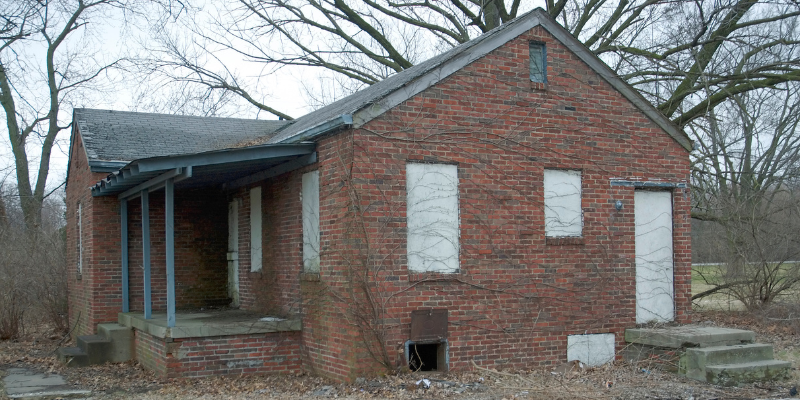
A condemned notice taped to your front door lands harder than any letter you’ve ever opened. One day you’re a homeowner. The next, the city has declared your property unfit for anyone to live in. Pressure builds fast, and that’s usually where sellers lose money, making panic decisions and taking the first lowball offer that shows up. This guide walks you through how to sell a condemned house in Ohio, what to do next, and how to sidestep the common traps.
What Is a Condemned House in Ohio?
A condemned house, under Ohio law, is a property the local government has declared unsafe or unfit for human habitation. That declaration arrives in writing, almost always after an inspection. It starts a formal process built on state law and local ordinances. Ohio Revised Code 715.26 gives cities the power to inspect buildings and to repair or remove the ones that are insecure, unsafe, or structurally defective, after notice to the owner and any lienholders.
Here’s what a condemnation order doesn’t mean. Your property hasn’t lost all its value, and your options haven’t disappeared. A condemned building isn’t automatically headed for the wrecking ball, since property owners can repair it or appeal the decision. Investors still buy these properties. Sales still close. Moving forward just looks different than a standard listing.
Condemnation and eminent domain get confused constantly. Eminent domain is the government taking your property for public use and paying you for it. A building condemnation is a code enforcement action about the structure’s condition. You still own the land. You still own the building. Neither your ownership nor your right to sell evaporates the moment an inspector posts a notice.
If you need to move quickly, contact us today for a fair cash offer and sell your condemned property as-is without delays, repairs, or complications.
Why Would a House Be Condemned in Ohio?
Cities in Ohio condemn properties over structural problems far more often than people expect. Abandoned houses and neglect get the headlines. A cracked foundation, a failed plumbing stack, or a roof that’s been leaking for three winters can make an ordinary property unsafe and uninhabitable just as fast.
Cleveland’s open data portal publishes an Active Condemnations dataset, and the city’s own wording is blunt: a condemnation violation means the property has been inspected and found uninhabitable. Similar code enforcement practices govern property across Northeast Ohio, from Akron and Canton to Lorain and Parma.
The most common causes are structural failures. Compromised foundations, failing load-bearing walls, roofs at risk of collapse. Health hazards trigger plenty of condemnations too: mold, asbestos, and lead paint especially, and Ohio’s older housing stock produces more of those than most states do.
Plumbing failures, sewage backups, and severe water damage also lead to condemnation. Cleveland’s code enforcement division points to serious fire damage, severe neglect, and structural compromise as the situations that typically produce one.
What Happens After a House Is Condemned in Ohio (Step-by-Step Timeline)
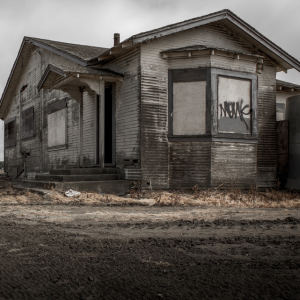
Once a house is condemned in Ohio, the process doesn’t end at the door notice. It runs on a code enforcement timeline, and every step adds a deadline, a possible fine, and more pressure on the property owner. A safety concern turns into a condemnation case with very little give in it.
Condemnation starts with an inspection, often set off by a complaint, a visible hazard, or a routine check. If the property is found unsafe or unfit for occupancy, the city issues a violation notice spelling out what repairs it wants. In Cleveland, property owners get 30 days to fix the violations or to file an appeal with the Board of Building Standards.
Miss that window and the city escalates. A formal condemnation order declares the property uninhabitable, and a notice goes up on the structure. Follow-up visits, fines, and required corrective actions come next. Cleveland sends a condemned file to the Department of Law for demolition approval once the 30-day appeal period runs out.
From there, a case can proceed to demolition, tax enforcement, or nuisance abatement. Ohio Revised Code 715.261 lets a city recover what it spends tearing down or securing a building. Those costs become a lien on the land from the date they’re incurred, and the city can certify them to the county auditor to sit on the tax duplicate. So it isn’t a bill you can ignore. It’s a charge that follows the property.
What Are Your Options When You Own a Condemned House in Ohio?
Property owners tend to picture a clean fix-and-sell path. Repair the violations, get the condemnation lifted, list it like any other property. That path is real. It falls apart when the repair estimates land.
Renovation work in Cleveland runs roughly $15 to $60 per square foot for standard scope, and $60 to $150 per square foot for a full gut to the studs, according to local remodeling contractors. On a 1,500-square-foot house, a gut job means something like $90,000 to $225,000. Foundation problems, fire damage, and years of deferred maintenance all push you toward the top of that range. By the time a seller in Euclid or Lorain finishes a full rehab, the margin on a retail sale is often gone, eaten by the very costs that looked manageable in month one.
In practice, you have three moves. First, repair and relist. If the violations are genuinely minor and you have cash on hand, lifting the condemnation and selling through a standard MLS listing gets you closest to full market value. In July 2026, Ohio home prices were up 3.7% year over year, with a median sale price of $279,992, according to Redfin.
You can sell as-is to Ohio cash buyers or investors. No repairs, no waiting on contractor schedules, no arguing with the city while fines accrue against the property. Or, if the structure is too far gone to save, you can sell the land alone, which works in neighborhoods where infill development is active.
Can You Legally Sell a Condemned House in Ohio?
Sitting across from a seller at their kitchen table, the first thing I say is: yes, you can sell this house, and a condemnation order does not stop the transaction. The key is understanding how the process works so you can make a clear decision rather than react in panic. Most sellers are surprised to learn the property still has real, workable exit options despite the notice.
Ohio law does not prohibit the sale of condemned property. The title can still transfer, and the transactions can still close, but the buyer pool changes significantly. Conventional lenders will not finance a condemned property, so most sales are cash transactions. That means buyers are usually investors, rehabbers, or direct cash buyers.
A property that goes further can end up in a county land bank or at a sheriff’s auction, where it is transferred to a new owner who assumes the local government’s rehabilitation requirements. At that point, timelines and outcomes are largely driven by the county process rather than the owner’s choices.
What Are the Legal and Disclosure Requirements for Selling a Condemned House in Ohio?

Skipping disclosure doesn’t protect you. It hands you personal liability that can follow you for years after closing. Ohio is a mandatory disclosure state. Sellers of one-to-four-unit residential property have to disclose known material defects on the Ohio Residential Property Disclosure Form, and a condemnation order plainly counts as one. A handful of transfers are exempt, court-ordered sales and transfers between family members among them, but an ordinary sale isn’t. The order is a public record attached to the property anyway. Buyers, title companies, and real estate agents will find it whether or not you bring it up.
Title work gets slower on a property with an active condemnation order. Title underwriters want to know what the city is asking for and whether costs have already been certified against the property. That’s one more reason the buyer pool narrows to cash buyers and investors who know how to read a code file.
Real estate agents can legally list a condemned property in Ohio. Most won’t. The ones who do will price in the liability they’re taking on. Local code obligations don’t vanish when the house changes hands either, and the new owner inherits them unless the sale contract says otherwise in writing. Get that spelled out.
Cleveland Cash Offers provides fair cash offers for condemned properties in Ohio, buying as-is with no repairs, no listing challenges, and no financing delays on the way to a simple, direct sale.
How to Sell a Condemned House in Ohio
You can sell a condemned property in Ohio without making a single repair. These sales run through cash buyers, including investor home buyers in Akron and other Ohio cities, who take homes in whatever shape they’re in. Lifting the condemnation and bringing the property into code compliance isn’t your job. The buyer takes it exactly as it sits and owns the work after closing.
The process is short. A cash buyer inspects the property, orders title, reads any condemnation or violation notices you can hand over, then makes an offer priced against the risk and the repair scope. No mortgage underwriting means no appraisal to wait on, and these transactions often close in about two to three weeks.
Convenience has a price. Buyers build repair costs, holding costs, and a margin into the offer, so the number comes in under what a renovated property would fetch on the open market. What you get back is speed, fewer moving parts, and an end to the carrying costs on a property you can’t use. That matters a lot if fines are stacking up or enforcement is moving forward.
Documents move the timeline more than anything else. Condemnation orders, city notices, tax information, and any repair history help a buyer price the property accurately instead of padding the offer for the unknown. Investors who work distressed homes every week aren’t scared off by a thick file. They’re scared off by not having one.
What Documents Do You Need Before Selling a Condemned House in Ohio
Nothing slows a condemned property sale down like missing paperwork. Buyers in distressed real estate move quickly, but they still need records to see what they’re taking on. Get organized up front, and you shorten the trip from first call to closing.
Start with the official condemnation notice and every related notice from the city or the code enforcement office. Those documents explain why the property was condemned and what it takes to lift the order. Buyers use them to size up repair scope and risk. Missing records mean a lower offer, a slower one, or both.
Pull your most recent property tax bill too, plus mortgage payoff information if there’s still a loan on the property. Title status matters a lot here, and buyers need clarity on liens, unpaid taxes, and judgments before they’ll commit.
Add any contractor reports, repair estimates, or insurance claim history, especially if the house has fire, water, or structural damage. Your deed and a valid ID need to be ready for closing. In condemnation sales, paperwork drives speed, pricing, and how seriously a buyer treats the opportunity from the first phone call.
Property Taxes and Back Taxes on a Condemned House in Ohio

Property taxes don’t pause because a house is condemned. A company that buys houses in Cleveland and other Ohio cities knows you stay responsible for unpaid taxes, penalties, and interest until the property sells or transfers. Cash buyers and title companies look at this first, because tax liens attach to the property and ride along through closing.
Back taxes get handled inside the sale. In most cash transactions, the buyer either factors the unpaid balance into the offer or pays it off at closing so title can transfer cleanly.
County treasurers can also start tax foreclosure. Once taxes are certified delinquent in Ohio, an owner has 60 days before the case can be referred to the county prosecutor to begin foreclosure. After a complaint is filed, you have 28 days to answer or risk losing the property by default. The whole process runs six months to more than a year, depending on the county. Once it starts, you’re not the one setting the timeline.
Before you talk to a buyer, request a full tax status report from the county treasurer’s office. It shows the current balance, the penalties, and whether foreclosure has begun. Buyers will pull it anyway. Having it in hand speeds up offers and kills the surprises that stall a closing.
How to Price a Condemned Property Correctly in Ohio?
Pricing a condemned property starts with the land, not the structure. In Northeast Ohio neighborhoods with active infill development, Cleveland’s near west side among them, land carries real value even when the house on it is beyond saving. Pull comps on vacant lots and recently demolished parcels that sold in the same zip code.
Then add whatever rehabilitation value the structure honestly offers. Say a house needs $40,000 in repairs to reach sellable condition, in a submarket where comparable rehabbed homes sell for $150,000. That spread is what an investor is paying for. Subtract their repair budget and their margin, and you’ve got roughly what a fair cash offer looks like.
The mistake I see most often is sellers pricing from need. What you owe, what you paid, what you’ve sunk into repairs over the years: none of it sets today’s value on a condemned property. Price from need instead of reality, and the property sits, while city fines and carrying costs chew through whatever equity is left.
How to Choose the Right Option for Selling Your Condemned House in Ohio?
Ohio homes sat a median of 43 days on the market in July 2026, according to Redfin. For a move-in-ready property, that’s fine. For a condemned house in Ohio facing enforcement action or possible demolition, a few extra weeks can mean more fines, more carrying costs, and more complications.
One family ran into exactly that with a condemned rental property left to several relatives in Garfield Heights. After nearly a year of carrying costs on a property with major structural and plumbing problems, they found the garage roof had collapsed over the winter. Selling also meant getting every heir to sign off, which added another layer of delay to an already hard situation. Holding the property stopped making financial sense.
An as-is cash sale turned out to be the practical answer. Repair estimates ran well past what they could afford, and the property sold to a direct buyer in under three weeks, ending the monthly bleed and the uncertainty with it.
Repairing and listing a condemned property can absolutely work. It needs cheap repairs, available funding, and a local market that supports a profitable resale. When repair costs are high, fines are climbing, or speed matters more than the last few thousand dollars, selling as-is is the better financial call.
Frequently Asked Questions
Is It Legal to Sell a Condemned House?
Yes. Ohio law permits the sale of a condemned property, and the condemnation status doesn’t void your ownership or your right to transfer title. What changes is who’s buying. Most lenders won’t finance a condemned home, so you’re working with cash buyers and investors instead of traditional homebuyers. The violation stays with the property after closing, so full disclosure to your buyer is required.
How Much Is a Condemned House Worth?
Value comes down to land value, location, and the real cost of rehabilitation. A condemned property in a high-demand Ohio suburb is worth more than the same structure in a declining rural county. Cash buyers price backward. They start with what comparable rehabbed homes sell for, then subtract their repair budget and their margin. Expect an as-is offer well below retail, and still well above zero in most cases.
Do You Get Money for a Condemned House?
You do, as long as you sell before the city demolishes the property and bills you for it. An as-is cash sale puts money back in your pocket without repair costs coming out of it first. If eminent domain is involved, the government owes you fair market value. Either way, how much you keep depends on moving before fines pile up and options close.
At Cleveland Cash Offers, we help Ohio property owners explore their options for condemned homes. If you’re trying to figure out what to do next, contact us at (216) 200-4160. Share what you know about the property, and get a straightforward assessment of its value and your available options. No obligation, no pressure, just an honest conversation with experienced buyers who purchase these properties every week.
Helpful Ohio Blog Articles
- Sell A House with Water Damage in Ohio
- Selling A House with Foundation Problems in Ohio
- How to Sell a Fire-Damaged House in Ohio
- Can A Buyer Back Out After Inspection in Ohio
- Selling Home With Reverse Mortgage in Ohio
- How Long Should You Live in a House Before Selling It?
- Selling a House With Unpermitted Work in Ohio
- Can You Sell a House With Asbestos in Ohio
- How to Sell a Condemned House in Ohio
- How Much Does it Cost to Sell a House in Ohio
- Appraisal Required Repairs in Ohio
- Do All Heirs Have to Agree to Sell Property in Ohio
- Can You Sell a House With Termites in Ohio